
Australia’s new ‘social media ban’ comes into effect this week, lifting the minimum age from 13 to 16. The world-first shift is the result of a hugely impactful campaign led by 36 Months director Greg Attwells, who’ll appear at Content Summit Australia 2026 to unpack how it all happened.
36 Months is the organisation behind the push to raise the minimum age for social media use. The group brought together parents, advocates and experts, and played a central role in elevating the proposal into public debate, supported by a petition that showed strong community backing.
The effectiveness of the campaign is impossible to ignore. A handful of people successfully reframed a national debate, built a story that everyday families could see themselves in, and shifted both sides of politics in a matter of months.
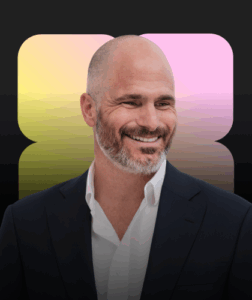
We caught up with 36 Months Director Greg Attwells ahead of his appearance at Content Summit Australia 2026 to talk about the change landing this week, how his team was able to build momentum so quickly, and how his background in advertising influenced the way he navigated media, politics and public pressure.
He also lays out the blueprint his team has developed for creating rapid, system-level change – a framework now being picked up by grassroots groups around the world.
Content Summit Australia (CSA): The 36 Months campaign has obviously been hugely impactful. So I guess the obvious question is why now, and why you?
Greg Attwells (GA): I guess the ‘why’, before we get to ‘why now’, would be that healthy teens don’t raise themselves. They’re raised by adults brave enough to build better systems. I’m really interested in the systems around adolescence and where the points of failure are, because there are many.
And one of those big points of failure was just the age at which you were allowed to become a citizen or an account holder on some of these platforms. Thirteen just felt too young. It’s not that the platforms in and of themselves were bad, but there were components or features that made them a real minefield for someone going through puberty.
We just thought, let’s give our kids an extra 36 months to get to know themselves before the world does. For us it was never about a ban or taking something away, but giving something back: more time. Giving families more time, and giving teenagers more time to develop that sense of social confidence before they put themselves out there online and open themselves up for commentary.
So that was the big why. Parents – adults – need to step in and bravely build better systems, and this felt like an area where that needed to happen. And that was validated by how quickly this became a thing. It was only a matter of weeks before we had tens of thousands of signatures on an online petition that we started; a Change.org petition.
The whole campaign only lasted six months between when we launched it and when the law was changed, which is crazy fast. People spend decades trying to get the government to do something. But this resonated because it was one of the things keeping parents up at night around the country.
We tapped into that feeling of powerlessness parents have around: “I’m losing my ability to connect with my kid, because of this whole world I’m losing them to. And I can see that it’s negatively impacting their mental health, and I don’t know what to do about it.”
I think the fact that it became the biggest petition in the world on this issue got the attention of policymakers in the lead-up to an election. The timing was interesting. I don’t know if we could have done this without an election happening at the same time, because we were able to make it an election issue. When a party promises to do something before an election, they have to do it after. That was our strategy.
And then for myself, why me? I’m a dad. I’ve got two daughters, 15 and 10. My other co-founders, [FINCH CEO] Rob [Galluzzo] and ‘Wippa’ [Nova’s Michael Wipfli], are both dads. We’ve all got kids around similar ages. We hadn’t lost a child to suicide or anything like that. Many parents have, but that wasn’t our story. But what we felt day-to-day was that we were in a double bind as parents: damned if we do, damned if we don’t.
Our kids were asking for these apps and we didn’t feel comfortable giving them to them. But then they say, “All my friends have it, and if I don’t have it, I won’t get invited to parties,” and you fear social isolation. So that was the feeling until we asked the question: what if no one’s on it? What if you take away the fear of missing out? And then the follow-up was, I wonder if we could change the law and raise the age? And that’s how it all got going.
CSA: You’ve come from a storytelling and creative background with [production company] FINCH. How did that experience shape the way you communicated this movement? Because a lot of parents have had this desire, but they weren’t able to do anything with it.
GA: There were probably two things strategically that we did that I’d credit to our comms and advertising background. One was we kept the message positive. You don’t build a movement on fear. You build a movement on hope. When people wade into these waters, it’s easy to rage against the machine of big tech and define yourself by what you’re against. You can rustle some feathers and get headlines, but you don’t build a movement like that. You build a movement by defining what you’re for. So we never made big tech the enemy. We said this is about healthy teen development and we care about things like self-esteem, belonging and resilience.
And when it comes to cultivating those things in our kids, social media makes it harder, not easier. It’s not helping. That positive message resonated. I think it’s part of the reason for the uptake. Compare that to another campaign active at the same time that News Corp ran, which was darker, more focused on the horrific side of the damage social media can do. Even though they’re a media juggernaut, their petition numbers were a lot smaller than ours. The positive message is what resonates. It’s what people want to be part of.
The second strategic decision was focusing on one thing, not everything. When we started getting press and attention, lots of advocacy groups contacted us wanting us to adopt their issue. Once you start talking about social media, you start talking about devices, smartphones, AI companions, deepfakes, porn, bullying, vapes… you pull the thread and you get tangled in connected issues.
But if we asked policymakers for too much, we wouldn’t have got anything. You’ve got to give them something clear and specific to debate and vote on. Even though all the other stuff is important, we stayed focused on raising the age from 13 to 16. That was the only thing we were asking for.
We got feedback from elected officials that because it was that simple, it allowed this to move swiftly. That’s something you learn in advertising and comms – one idea. Build a creative campaign about one idea only. And a positive message resonates more than shock-and-awe tactics.
We’d never done a policy change campaign before. I’d never lobbied government for anything. I’d never engaged with the political process like this. But we applied advertising and comms know-how to this arena and found it works there too.
CSA: Was there a particular moment where you felt like, “This is it”? Or a particular tactic that helped accelerate the campaign?
GA: Yeah. The biggest moment was around August last year. We felt like we were losing momentum and needed to do something. We were getting ignored by the sitting government. We made a decision. Let’s go down to Canberra. Literally take the petition, print it into a massive booklet, and march the steps with families who’d lost kids, and experts who had advocated for reforms. Let’s try to get a meeting because no one was inviting us. We were losing a bit of steam.
So we drove down to Canberra. Took a few cars, took a bunch of people, let the PM’s office know we were coming. We heard back that, because of who we were bringing, they’d take a meeting with us – both sides, Dutton as well as Albo. We had all these speeches prepared, stuff we were going to say to persuade them.
Then, the morning of the meeting, it got pushed back 30-60 minutes. The “something else” that bumped us was a last-minute press conference where the PM and the Communications Minister came out and announced they were legislating a minimum age. It was going to happen that year. They just needed to figure out what the minimum age was. I genuinely believe that wouldn’t have happened if we hadn’t decided to go down there off our own back. That was the moment everything came to a head.
I’d say that was also when big tech became more vocal in lobbying; trying to confuse the public on issues like digital ID and privacy. That started working. People got eggy about things that weren’t really the issue. We got feedback from policy makers later that if it didn’t happen before Christmas, it probably wouldn’t have happened.
So going down there, marching the steps and taking it by the scruff of the neck, ended up being the pivotal moment. I don’t think I’ve ever shared that story publicly. No one’s asked, so I’ve never reflected on it, but I think that was the fulcrum moment that it all hinged on.
CSA: It’s interesting that you took families with you who had been affected. How did you incorporate those families without slipping into exploitation or sensationalism, or those darker messages you wanted to avoid?
GA: Yeah, that wasn’t part of our strategy initially, because it can feel exploitative. You don’t want to use someone’s pain for a campaign. But the other side is, these families have gone through horrendous grief and are trying to make sense of it. They wanted to tell the story and do something with it. They felt a responsibility to advocate for change, so that what happened to their kids doesn’t happen to anyone else.
So it was a mutual coming together. We needed to keep the main thing the main thing, because it really is a matter of life and death for some families. We didn’t want to get lost in the smaller, more trivial issues at play. And these families, they wanted to speak. They had a story to tell. So it felt collaborative and caring and right. There were just a few that we included – Rob Evans in Melbourne; Matt and Kelly O’Brien in Sydney who lost their daughter, Charlotte; Emma Mason; Mia Banister. There were a few where it felt safe to collaborate in a respectful way.
CSA: You mentioned the social platforms tried to steer the conversation towards enforcement, privacy and technical feasibility. How did you avoid getting dragged into those arguments and keep the narrative on the human impact?
GA: I really like Scott Galloway, and he said something last year that we quoted often. When asked how the platforms would enforce this, we leaned on his thought. He said, ‘What’s more challenging – figuring out if someone is younger than 16, or building a global real-time communication network that stores near-infinite text, video and audio, retrievable by billions of users in milliseconds with 24/7 uptime? The social media giants know where you are, what you’re doing, how you’re feeling, even if you’re experiencing suicidal ideation… but they can’t figure out your age? You can’t make this s*** up.’
It was a reminder that they know how to do this; it’s just that no one has made them behave differently. They’ve been able to operate commercially in a largely unregulated space. All that needs to happen now is sovereign states making deliberate decisions about digital duty of care; figuring out the age at which someone is old enough to navigate these environments responsibly. So we never let ourselves get stuck debating the tech stuff. We always lifted the conversation back up.
Another strategic thing – this has always lived in the world of cyber and online safety, under the Communications Minister, and that is Big Tech’s arena. They hold all the cards there. We decided to make it a health issue, not a communications issue. This is about the mental health of our children. If you look at the rise in anxiety, depression, eating disorders, negative body image, self-harm, suicide… keeping the status quo while we work on nuanced remedies felt negligent. When it’s a health crisis, you act swiftly.
CSA: Framing it as a crisis helped you get around the obfuscation tactics. They couldn’t say, ‘Well, we don’t know exactly how this is going to work, so we’ll figure out all the little details and get back to you later.’
GA: Yeah, ‘we’ll kick the can down the road, we’ll have more committee meetings’, etc. The other thing is we leveraged an election. There was a lot of back-channeling. We pushed both sides of politics to make an election promise: “If you elect us, we will make this change within the first 90 days.” Peter Dutton was the first to make that promise, then Albo. It became bipartisan, which was good.
Being able to leverage the timing of an election was critical, because it helped create that sense of urgency. At the end of the day, politicians care about two things more than anything else – media and votes. We pulled those two levers.
CSA: Yeah. We talked about your background with FINCH, but you’ve also written folk and gospel music. Did you have any concerns that your openness about your faith could be used against you, especially by tech companies, to dismiss the campaign as a religious issue?
GA: Again, you’re asking good questions that nobody ever asks. I quietly wonder about that myself, if I’m honest. I wonder if things I did in my 20s and early 30s with my music and my faith background might come up in the future in a way that could be used against me when I’m trying to do something good. It’s a quiet wondering. It’s never actually happened yet, except maybe some trolling on Twitter. I don’t pay attention to that.
My response is, it’s a genuine and authentic part of my story. I’m not ashamed of it. Our views evolve over time, we get wiser and more balanced. When I look back on that time, that’s what I was into and believed. I’ve always been interested in finding words that matter. I love language and using it to make meaning and move people. I think the gift or skill that lets me write songs is the same skill that helps me think about the messaging of a campaign and what will resonate with the audience we’re targeting.
CSA: The campaign has been wildly successful in Australia. You’ve talked about supporting movements overseas. Do you think the blueprint will translate universally, or does it need to be adapted country to country?
GA: I think the blueprint is very adaptable. I think it works in most contexts because the principles are pretty universal.
What we haven’t spoken much about publicly is that there were five key roles in this campaign that I think every grassroots group will need – the Herald, the Sage, the Sponsor, the Villain, and, I’ll say, the Niki.
The Herald is the mouthpiece of the campaign, preferably someone with a media platform they can leverage. Whipper played that role for us, especially in the early days.
The Sage is the seasoned political advisor behind the scenes, helping you navigate the political landscape. We had a few people play that role as the campaign grew.
The Sponsor… you know, all of this costs money. We played in the PR space, and we needed to pay publicists. We self-funded a lot, but brands came in early to support us, which helped.
The Villain keeps you on your toes. You need an adversary to stay vigilant. Our villain wasn’t actually Big Tech, but other groups campaigning in the space that we felt were doing it poorly, or in ways we felt were dark or negative. There’s nothing more motivating than someone trying to do something similar to you, but doing it badly, because they could potentially ruin it for everybody.
Early on, we approached News Corp for support, and shortly after they decided to run their own campaign, which they had the prerogative to do. They said they’d point people to the same petition, but in the end they set up their own. They can do that, but for us it became something to outmanoeuvre, to keep the movement positive and avoid it getting hijacked by darker and conflicted agendas.
And the last one, the Niki [Waldegrave]. She was our publicist. You need that gritty hustler who wakes up every morning and pitches to media in an unrelenting way. We needed to rattle the cage in the press for a long time. That gritty publicist role is mission critical. I’d say all five roles need to be present.
CSA: Well, we look forward to hearing more about those five essential roles at Content Summit Australia…
Want to dive deeper into how movements like this are built? Greg will join a packed lineup at Content Summit Australia 2026.
Across two days and three dedicated content tracks at Brisbane Powerhouse, Content Summit Australia brings together marketers, strategists and creatives to talk all things content, from brand storytelling and strategy to social, video, design and audience engagement.
Early bird tickets are on sale now until 31 January 2026, or sooner if they sell out. Secure your spot now.